Wednesday, January 23, 2013

Some Cold Snap Winter Steelheading Pics


Loading the rod up for the cast....
Setting up for that next two handed cast....
Hefty Winter Steelhead Buck displaying its river colors....
Ice Crystals growing from the bedrock along the river's edge....
Cauliflower Mushroom
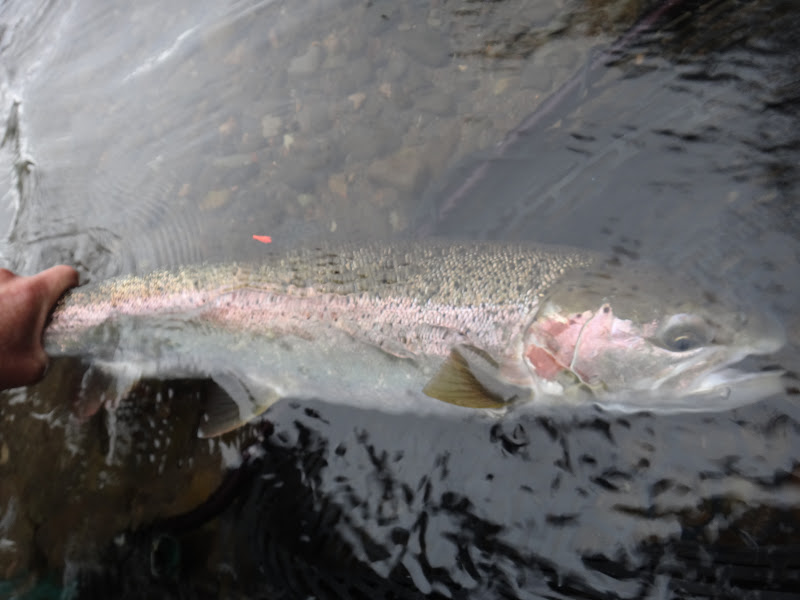
Cold water offers up this hen....
Misty ice fog burning off....
Frost lined ferns.....
Winter steelhead are typically more fun to play with when they have one of these.....
On tight....
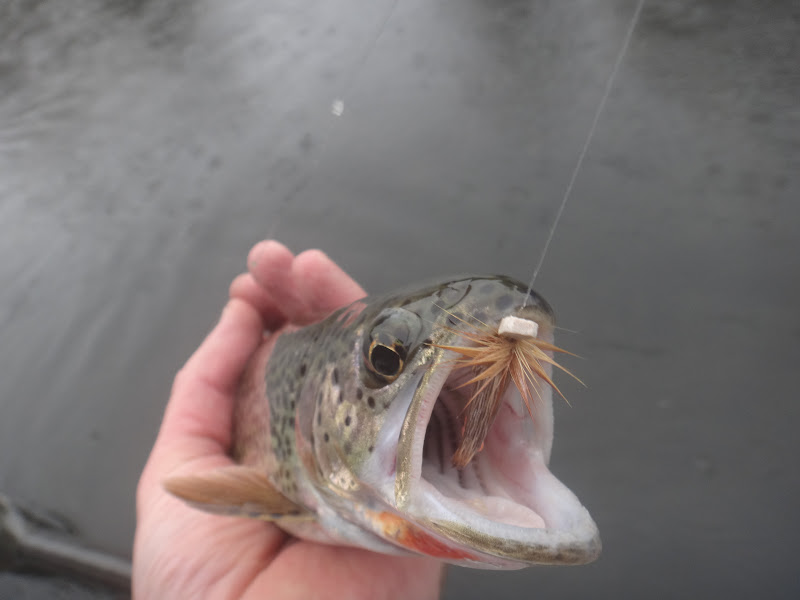
Bycatch Sea Run Cutthroat trout....

Sunday, January 13, 2013

Salmon Fly Fishing Video - Check It Out!

This video is from a fishing trip Nikki and I took this past fall. We planned our trip literally almost a year ago, and somehow the dates totally panned out with really good fishing for fall Chinook Salmon. We also did some mushroom hunting for King Boletes and we scored finding them as well. All in all a wonderfully productive and relaxing three day trip at the coast with relatively nice weather too. Enjoy the video!!

Click onto video below to view:

Wednesday, January 9, 2013

Carp'N the PDX Flats - Video

With the recent rains blowing the rivers out in the PDX area, I am suffering from a case of "cabin fever". I was supposed to be out on the river both yesterday and today, but the rising waters on the river I was heading to kept me off. Times like this make me dream of warm weather and how nice it would be to be fly fishing close to Portland in search of carp in the flats within driving distance of the city.

Click on the video below so you can get a taste of some warm weather fly fishing near the PDX area:

Switch Rods & Winter Steelheading


Chrome Bright "One Salt" Winter Steelhead fell to a dead drifted Glo-Bug on Switch Rod
With all of the popularity with two handed fly rods nowadays, many people are asking about switch rods. I have put up a video lower down in this post with some clips of switch rods being used for winter steelhead fly fishing. For smaller to medium sized streams with tight cover, there is not a better rod to be using while fishing for anadromous species like steelhead and salmon. The versatility of the switch rod is amazing, where you can fish a huge variety of fly lines on one rod to effectively fish with varying presentations.
Orvis Access Switch Rod and Mirage Reel with Airflo's 480 Grain Skagit Switch head
If you take the larger longer counterpart "the Spey Rod", you get the ultimate tool for swinging flies. You can cast far easily, and you can handle your line like a champ with major line mending ability. On the flip side, you have a tool that can swing flies better than any fly rod made, but you have a terrible nymphing rod, and I just feel like dead drifting flies under an indicator on a Spey rod is sacrilegious. Skagit heads with slabs of  level sinking line (like T-14) attached off of it are the norm for winter steelhead fly fishing with a Spey rod. When you want to get into nymph fishing with a Spey rod; you may get some funny looks from other anglers. The only analogy I can come up with to compare would be trying to "Hot Dog" surf (shred and do tricks) with a long board. You just don't do it! Spey rods are simply too awkward to effectively nymph with!
Orvis Helios Switch Rod and Mirage Reel
The single handed rod for steelhead fly fishing is typically a 10' long rod and often a 7wt or 8wt for the line weight designation. If you want to swing flies effectively for winter steelhead on this setup; you will have to cast big 28' shooting heads, and the lack of back casting lanes in tight covered coastal streams can make that situation a nightmare. Those big shooting heads are about the only way you can achieve the depths of a two handed rod's sink tip line throwing abilities, but they are cumbersome to cast at the least. If you want to dead drift flies under a strike indicator like a Thingamabobber, then you can fish an Orvis Salmon/Steelhead Taper with a long belly and long rear taper. That can turn over your flies, and you can handle your line relatively well from far distances. The problem is that you have to be good at casting your single handed fly rod, and many anglers only get to fish here and there; so getting good enough to proficiently cast over 40' is often lacking. The average every day angler has trouble casting over 40' on a single handed fly rod, and many spots you want to probe your flies through require an over 40' cast. This is where "Switch Rods" are an amazing compromise for those looking to get into the ultimate outfit for fly fishing for winter steelhead, or year round steelheading for that matter.
Click on Video Below:
Switch rods can fish really well for both the swinging and nymphing/dead drifting presentations for steelhead fly fishing. They can function with a variety of fly line tapers on them, and they often throw many fly line tapers with ease. On my own personal switch rods, I throw Skagit Switch heads, Skagit Intermediate heads, Orvis Switch lines, a Speydicator, Orvis Salmon/Steelhead Tapers, 28' Shooting heads, and even a few more tapers not mentioned. I typically go steelhead fishing with two spools for my Mirage reel; with one spool holding a Skagit Switch Head, and the other spool strung with a Orvis Switch Line. I can go back and forth between swinging flies with a Skagit Head attached to varying lengths and densities of T-8 to T-14, or I can nymph/dead drift flies under a Thingamabobber with my Orvis Switch Line. The rod can fish like a Spey rod while I am swinging flies, and I can fish it either like a single handed rod or a hybridized spey/single handed rod for my nymph/dead drift fishing. I have taken my 6wt switch rod out rigged with an 8wt Salmon/Steelhead Taper (single hand fly line), and it fishes really well. It does not "spey fish" as well as the Switch Line, but you always will have pros and cons with every fly line to rod match up. I can even throw those 28' single handed shooting heads  (while fishing for Fall salmon or rockfishing in the saltwater), and the switch rod does a great job handling them.
Switch Rods make fly fishing in tight cover with little back cast room very enjoyable!
 Years ago when I had a fly shop, I would suggest people get a 10' 7wt or 8wt, and then a Spey Rod as a second rod. Now I am bold to tell someone to start with a switch rod as your first steelhead outfit, and then build up your extra spool/fly line arsenal to fit the niches of your fishing presentations. You can then have a rod that swings flies and nymphs very well with the given conditions; so you can effectively be "In the Zone" where the CHROMERS are hanging out!

Tight Lines to All!!!

Wednesday, December 19, 2012

Winter Steelhead Update & Video - Winter Steelhead Fly Fishing Clips: 2012 Season


One of many possible winter steelhead streams in the Oregon coast mountain range
Recently with all of the rains and swollen rivers, I know I have come down with a case of cabin fever. I have been working too much inside, and fishing too little. The days I have been out fishing have not been as good as they could be; since I have not been lining up being there at the best of conditions. Now I have two days off in a row, and the rivers are swelling up as I write this entry. Fish counts are good for the hatchery runs so far (higher numbers than last year at one hatchery when I asked), and wild fish have been recorded upstream in fish traps that separate native stocks to run up farther while weeding out the genetically contaminating hatchery stocks. Winter steelhead season is here, and it is in full swing now, but we have to wait for the weather part of the equation to cooperate now. Whatever you choose to fish, whether it be the Clackamas, the Sandy, The Wilson, North Fork Nehalem, The Nestucca, North Fork Alsea, Gnat Creek, Siletz, etc, you can count on healthy numbers of winter steelhead being throughout the systems. Now it is just being at the right place at the right time in order to increase your odds of having good success out there for these fresh running winter steelhead.


Most of the above video is filmed on coastal streams west of Portland Oregon. Most of the steelhead are wild in this video, and they were treated with the utmost respect. All of the wild fish were released completely unharmed, while hatchery fish may have been treated otherwise. There are a few hatchery winter steelhead in this video, but you will mainly see nice fish with adipose fins that are intact. For the most part this is video shows you some of the best wild steelhead moments that happened to be on video for the season. Fishing in this video is everything from fun fishing with friends to clips of clients getting in on the action with chrome bright winter steelhead while on guided trips. Be in store for some epic winter steelheading! This video will make you drool on the rainy days when you cannot get out and go fishing.

Tight Lines!

Friday, December 14, 2012

Another Winter Steelhead Class Date Being Offered By Popular Demand

With two classes filled up, and people emailing me and asking me about spots being open; I am going to offer one more date. This February 3, 2012 there will be another WINTER STEELHEAD FLY FISHING CLASS. The backup date will be one week later on 2/10/12 in case it rains too much, and water levels rise up too high for the class.
Landing a nice chrome bright salty fresh winter steelhead
 The class will be exactly the same format as the two class dates (Jan 5th or Jan 6th) listed previously on the blog. For more detailed information click here to learn more about the WINTER STEELHEAD FLY FISHING CLASS. 

Four people will be allowed in the class, and one person is signed up already; so three spots are left. Sign up now! A wonderful holiday gift idea if you have a fly fisher to shop for!!

Tuesday, December 4, 2012

Orvis Helios 2 - 9' 8wt Tip Flex 4PC - Product Review

Recently some hot new rods have come out in the fly fishing market, and after several years of providing the industry standard with the Helios; Orvis has come out with another masterpiece of a fly rod. The HELIOS2 is the answer to the newest, latest, and greatest in the fly fishing industry, and it is something everyone needs to cast to feel how ridiculously awesome it is. This review is going to go over the 9' 8wt Tip Flex 4pc, and I am going to go over the review with the rod being cast with the Orvis Hydros All Rounder Saltwater Fly Line; so other lines can obviously influence the action of the rod making it load less aggressively or more aggressively.
Orvis Helios 2 9' 8wt Tip Flex 4 PC Fly Rod
When casting rods, I like to start out ultra short, and then work out intervals of fly line; so you can test out the action at different lengths. Many people often blast out as much line as they can, but in real life fishing situations with an 8wt; you are often fishing from 15' to around 70'. When starting out short the rod loads wonderfully with a foot or two of line out and just a tapered leader. It is about as accurate as an 8wt could be when loading a couple feet of fly line, and it worked well into the wind and with the wind at my back.

A few more strips of line, and I was casting again with complete accuracy both into the wind and with the wind at many different angles. Real life saltwater fishing, and open water casting involves wind, and often it is blowing. I was picking targets and landing right on the money each time more or less, and the rods was throwing with straight line precision accuracy. I was only under 40 feet, and the rod felt like a super accurate trout rod chucking dry flies. I was ready to feel how much line this beauty could throw when applying some force to it.

I stripped off line so my cast was getting to be in the over 50' mark, and the first forward stroke came by my head with lightning speed, and as the loop completed in front of me the line yerked out of the reel with the drag making a purr, and the reel revolved practically a full rotation. I thought, "WOW.....some serious power on this rod.....!" I pulled off more line, and noticed the rod can easily pick up the whole fly line belly with ease and some running line as well. One back haul, and one front stroke and the line laser beamed out again! This H2 is a beast! It can throw line like you can't imagine!! I then kept on pulling line out to do the macho bomb make yourself feel good stroke, and the rod pushed out line like nobody's business. This rod works from super short to super long, and it feel like a charm in and out of the wind. The rod also held its accuracy with distance involved, and it also did not buckle when you tried too hard to punch the cast.

The rod really works well with anglers of all casting types too. I have noticed that novices along with experienced casters seem to really groove with the action of this fly rod. I have seen people who claim to be less experienced casters have really nice casts shoot through the guides of this wonderfully powerful fly rod. I have also seen some mind bending casts zing through the guides with some "heavy hitter" casters; so whatever your ability is, this rod will work for your casting stroke. My favorite is how you can strip back to the running line/rear taper portion of the fly line with this rod, and you can back cast shooting line out hard, and then haul it into the forward stroke and the line shoots like a cannon causing the reel to spin into an outward rotation. You know the rod is loading hard when that happens!

I know when I am ready to get my next fly rod, it is going to be a 9' 8wt HELIOS2 Tip Flex 4pc. Although, I feel that way about the whole series of H2's, but this one is only the first one that I am reviewing so far for the blog.....

You can swing by one of your local Orvis shops to try one of these fine fly rods out. This 9' 8wt fly rod is the most enjoyable single handed 9' 8wt fly rod I have ever tried out so far! If you are in Portland Oregon, stop by the Portland Orvis to get yourself outfitted with one of these amazing H2 fly rods!

http://www.orvis.com/intro.aspx?subject=10438
Click Above Link Videos & Tech Information

Saturday, November 24, 2012

Winter Steelhead Class Reminder/Update

The Winter Steelhead Class for Saturday January 5th is full now, but the Sunday January 6th class still has four spaces available. This is a wonderful gift you can give to your favorite fly fishing friend, family member, and/or significant other for the holiday season; or for yourself to learn how to fly fish for winter steelhead.
Dime Bright Winter Steelhead
Email me at fish@mckenzieangler.com or call me at (541)-232-6360 to sign up for this awesome opportunity to become a proficient winter steelhead fly fisher.

Tuesday, November 20, 2012

Winter Steelhead Video To Pump You Up; While the River Levels are Blown Out

With the recent big time storm, our rivers took a huge hit, and levels are blown out for a couple of days at the least. The best odds for success coming up would be if you are planning on fishing a smaller creek/stream which will clear up quickly, but if you plan on fishing the larger rivers like the Wilson, then you are at least several days off. Luckily the Wilson hit flood stage last night, and now it is dropping like a rock.

Gauge Reading for Wilson River at Tillamook
The Nehalem River on the other hand really rose a lot, and it will be at least a couple of weeks to drop into a fishable levels. Hatchery steelhead should running viably after the river levels fall for those rivers that get planted like the Wilson, Alsea, Siletz, Clackamas, Sandy, North Fork Nehalem, Gnat Creek, & Big Creek(to name a few).The runs should be strong through mid January; so get yourself out there as soon as levels drop to get into this wonderful early winter opportunity.
Gauge Reading for Nehalem River at Foss
This winter steelhead fell to a pink egg sucking leech
 With all of the weather I know I am developing some "cabin fever", and I am really itching to get out for some fishing. Since there is not much angling that can be done in the area of northwest Oregon, I have put up a short video for you to enjoy. This will hopefully get you all fired up for the winter fly fishing action that you have to look forward to. It was filmed late last winter, and it was a really hot pretty buck steelhead.

Enjoy the Video (click to view):

Monday, November 19, 2012

Winter Steelhead Fly Fishing Class - January 5th or January 6th, 2013

When you ask most anglers how they fly fish for winter steelhead, they often tell you only one method on how they do it. They may say "I swing flies with a Spey rod using a Skagit head and 10' of T-14 sinking tipped line on the end, and a huge articulated fly on the end". The next guy would say he uses a 28' shooting head and an single handed 8wt with a big black leech. The next woman uses a strike indicator, and a fly that looks like a pink jig on a 10' 7wt rod; while her friend uses Trout Beads on a switch rod with a Thingamabobber strike indicator. They are all correct techniques to use for winter steelhead, but which one is the best for you and the river/spot you are fishing at?

All of these methods sound great, but which technique would want to do when you go to a river at the coast laden with bedrock slots and very little cobblestone present? Many people boldly tell you, "This is all you need to do to catch winter steelhead", or "the only thing I ever use for winter steelhead is..." Those people are often not the ones you should be picking up your techniques from; since they may fish a river or a run that is conducive for swinging flies; while you are constantly fishing a stream/run that requires a dead drifted fly to probe into a deep slot to get into a fish. This class will demystify all of the things that make winter steelhead fly fishing seem so hard or unapproachable. Reality is that winter steelhead fly fishing can be as simple or as complicated as you want to make it. Another reality is that you should be able to catch winter run steelhead on most of your outings when you are fishing proficiently. Winter steelhead are not the mythological fish that they used to be years ago. With the internet having live feed of water levels, modern fly line design, modern flies design, and the high tech rods we now have; winter run steelhead can be effectively fished for, and by season's end, you can have large numbers of fish you have caught while everyone has been complaining about the winter and having "cabin fever".
A gorgeous wild native winter steelhead
I will be instructing two different steelhead classes coming up in early January. Each class will have room for four people to sign up, and participate. The class will not be a GUIDED fishing trip, but it will be a CLASS. You will be on the water in this class; so you will need to have your own waders and wading boots, a rain jacket, hat, polarized sunglasses, etc. I will have several rods I will be bringing, and you are more than welcome to use the equipment I will have for the class. You can also bring your favorite steelhead rod, and we can make sure in the class that you have the right setup for winter steelhead fly fishing. For this class, I will have single handed rods (10' 8wts), switch rods (11'ers), and spey rods also (13'ers) to demonstrate and have you all try out. This way if you are interested in winter steelheading, but have not chosen a rod/reel yet, you may find out what type of setup you are most comfortable with.
Admiring a wonderful trophy winter steelhead
The class will go into winter steelhead techniques and there will be on the water demonstrations; so you can see how the fishing should actually look when done correctly. Casting techniques will be demonstrated; since most winter steelhead streams have no back cast room, or little back cast room at all. Reading water will be covered; since you have to know what types of water will hold winter steelhead, and then how to approach those types of water for your best success out there. We will go over the equipment used for winter steelheading, and the different types of fly lines used for different situations with the two handed rods and single handed rods. Choosing your flies, and how to rig them up properly will be covered in the class. This class will really dive into all of the common aspects of winter steelhead fly fishing, and you will come out of the class knowing what to do on your own when you decide to hit the water this winter in pursuit of winter run steelhead.

Winter steelhead are one special fish to tie into with your fly rod
The cost of the class will be $100, and the class will be offered on Saturday January 5th -or- Sunday January 6th. Class time will be from 9am to 2pm, and we will start right at 9am. You will want to show up about 15 minutes early to be able to get your waders and gear on; so you can be ready to start on time for the class. We will be meeting at either the Wilson River at the Jones Creek Bridge or at the North Fork Nehalem Hatchery Parking lot (location to be decided when the date gets closers according to river conditions). I have chosen the two possible spots for the meeting place so I can decide on the location according to which place will offer better steelhead conditions according to water levels and weather, etc. -There will also be backup/alternate dates in case rains raise the rivers too much and we have to do the class at a later time. The Saturday the 5th class will have a backup date of Saturday January 19th, and the Sunday the 6th class will have a backup date of Sunday January 20th.
This rose cheeked native buck winter steelhead finally yielded after one acrobatic fight
In order to sign up for the class, email me at fish@mckenzieangler.com or call me at (541)-232-6360. Payments must be received in full to be officially signed up for the class.
-Cancellations must be done at least 15 days before the class date to receive a full refund for the class. This ensures people to be able to re-sign up if someone cancels; since these classes often fill up fast, and have a high demand for instruction.

Sunday, November 11, 2012

Important Article About Our FIsheries!! - Conservationists Ask State to Study Impacts of McKenzie Hatcheries on Imperiled Wild Spring Chinook Salmon (press release)

This article and topic is something that is totally important to me; since I do a huge portion of my spring, summer, and fall guiding on the McKenzie River. I also had heard rumors of this lawsuit a while back from someone in a conversation; so I am posting this article for those interested. It is funny and a oxymoron  how the McKenzie River is managed, since you can fish with bait in the "general regulations season" from the third Saturday in April through October 31st (fly and lure all year round), and you can keep finclipped steelhead, finclipped trout, and finclipped salmon. The McKenzie is managed for all wild trout and salmon though, and you can kill a steelhead that has an adipose fin (since the head regional bio in the area somehow got that passed - thinking they are all ferule fish and deserve to die - Whatever happened to strays?). Basically the management is a total nightmare on the Mac, and there are also other vested interests that do business in the river valley stocking the living daylights out of the river with CRAPPY HATCHERY PLANTED TROUT. 

We have some studies going on in the river that are trying to protect the wild native trout, but those studies have only covered a few miles restored native trout habitat from a cease in stocking in that stretch. This has caused the natives in that certain stretch of the river to get heavy researching pressure; being caught and tagged with lots of fish handling. Why can't we simply use other river models to model the management after? It has been proven across the board that rivers with planted hatchery trout suffer, and rivers with wild fish only management strategies are typically healthy and thriving. Anyhow, enough ranting for me about the strange management of the McKenzie river for its fisheries. I want to inform you blog readers about this article that discusses how the Western Environmental Law Center, on behalf of the McKenzie Flyfishers, (on November 6th) sent a notice of intent to sue to the Oregon Department of Fish & Wildlife (ODFW) for operating two fish hatcheries on the McKenzie River that harm wild Chinook salmon without having studied the impacts of hatcheries and obtaining federal approval to operate them. (taken from the article's first line
 Click Link Below to read the article:
Location: Eugene, OR

A Spawned out Spring Chinook Salmon after it has completed its spawning cycle

Thursday, November 8, 2012

Small fish, big opportunity - Article sent from Pacific Fisheries Management Council

Here is an article of interest I wanted to show all of you blog followers. The article written by the Pew Environment Group, and it discusses the work of The Pacific Fishery Management Council; which is based in Portland, Oregon. The council will meet this week to discuss their Draft Fishery Ecosystem Plan.

By PETER BAKER AND PAUL SHIVELY

Sometimes the environmental challenges facing our oceans seem so large that it's hard to know where to start solving them. Changes in climate, degradation of habitat and rising demand to feed an ever-growing world population are just a few of the daunting ocean-related problems our nation faces.

Over the past several months, however, a collection of conservationists, anglers and others have come together to urge federal policymakers to safeguard the array of species that serve as the foundation for a healthy marine ecosystem. And, to their credit, regional fishery managers on both coasts heeded the message these advocates delivered: If we want to protect the oceans, it makes sense to start small.

Species such as menhaden, sardines and herring - commonly known as forage fish - are the lifeblood of a healthy ocean. Swimming together in dense schools, these oil-rich fish feed on microscopic plants and animals and then become nourishment for larger wildlife as a crucial link in the marine food web. These fish account for more than one-third of all ocean species caught around the world. But unlike catches of cod or tuna, most of the forage fish that is caught is not consumed by people.

Take menhaden, for example. Giant schools once ranged along the Atlantic coast, feeding whales and seabirds and commercially important fish. But menhaden populations have plummeted 90 percent in just the past 25 years and remain at a record low. Despite their declining numbers, hundreds of millions of menhaden are still hauled in and ground up to be used in fertilizer, pet and livestock feed, and dietary supplements for people.

This removal of forage fish can have significant impacts on coastal ecosystems. Studies have found that the amount of menhaden in the diets of striped bass, ospreys and bluefish has declined. And on the Pacific coast, the decrease of forage fish has been linked to diminished salmon runs, losses in seabird populations, and the unnecessary death of marine mammals. In fact, in 2009 scientists documented 80 percent mortality among pups in a population of sea lions off the coast of California when females left them for a week at a time in search of food.

According to a report issued this year by a panel of 13 eminent ocean scientists, forage fish are twice as valuable left in the water as they are caught in a net because of the vital role they play as food for commercially valuable predators such as tuna and cod. In other words, it's important for federal fishery managers to ensure that there are enough of them to feed everything else in the sea.

That's why conservation and fishing organizations - including the Pew Environment Group - have urged the federal government to step up protection of forage species in the Atlantic and the Pacific. In the Atlantic, we are calling on the National Oceanic and Atmospheric Administration to follow the expressed will of regional fishery councils and implement new protections for menhaden and river herring. And on the West Coast, we are asking NOAA officials to fulfill the Pacific Fishery Management Council's June commitment to forestall fishing for certain forage species until there is proof that catching such forage fish will not harm the overall ecosystem.

Even though the regional fishery councils endorsed these common-sense objectives and earned broad public support, those commitments mean nothing until NOAA implements the policies. Unfortunately, agency officials have been slow to embrace the councils' direction.

America's oceans offer a tremendous economic asset and cultural legacy. Whether you enjoy fishing on the water, eating a sumptuous seafood meal, or watching whales and seabirds, all of these activities depend upon a thriving and healthy marine ecosystem.

Forage fish nourish other wildlife and sustain important commercial and recreational fisheries. If we're going to protect our oceans as a whole, we must make sure that healthy populations of these smaller prey species remain in the water to support the entire food web.

------------------------------------------------------------------
ABOUT THE WRITERS
Peter Baker (pbaker@pewtrusts.org ) and Paul Shively (pshively@pewtrusts.org ) of the Pew Environment Group are both are avid anglers who work to conserve fish in New England and along the West Coast, respectively.

Monday, November 5, 2012

Some Pics of The Fall Fishing - Late Oct - Early Nov

I have been really busy guiding this fall, and working at Orvis on my non guiding days more or less. Keeping up with the blog postings has been a challenge with the combination of lots of other "work" to take care of, but I will have more time coming up to get some material back into the "bloggersphere". With lots of rain recently, I had to cancel a few trips, and ended up having some time to fish a little. I also went to do some salmon fishing and mushroom hunting with Nikki on my time after my guided trips. We had some fun fishing and scored on the King Boletes (mushrooms) too. I wanted to share some photos from the last couple of weeks; so I hope you will enjoy them!
Sea Run Cutthroat took this trout bead while angling for Chinook Salmon

Another Sea Run Cutty that could not resist the "Trout Bead" while salmon fishing

Angler in the battle with a really large cutthroat on the upper Willamette River

The reason why you lose some strong fresh fall Chinook salmon at tidewater pools

Now Nikki can add fall Chinook Salmon to her resume of fish caught on a fly rod.

A fine snow bellied fall Chinook Salmon - note the sea lice near my right hand

Nothing is better than catching salmon like this right from the salt......

These salmon had guts and gullets full of these baitfish

Another fine catch while we were salmon fishing - King Boletes

Napping & Feeling lazy in the gorgeous sunshine

Clouser Minnows tied with chartreuse & white or chartreuse & baby blue were the hot ticket for these fall Chinook 

Saturday, October 20, 2012

October McKenzie Fly Fishing Update - Photos

Well I have been out touch lately on a heavy guiding bender; so I have been away from the computer. Sorry for the lack of blog postings in the recent days, but this is the last month of the dry season fly fishing, and the weather is currently swinging into the wet season. Here are some pics from the fishing trips I have been experiencing recently. We had one big gusher that blew the river out for a day, and now we are on more of a normal weather pattern again. Fishing should be good over the next couple of weeks as long as the weather cooperates. Between fall trout fishing, fall summer steelheading, and fall salmon; there is plenty of good opportunities to engage in fly fishing-wise.Get out there and experience it before the wet season kicks in, and you get cases of "cabin fever"
This Coastal Cutty took this October Caddis Dry Fly

Some red fall colors on the banks of the McKenzie River

This rainbow took a Morrish's Super Pupa dead drifted under a October Caddis Dry

On tight to a McKenzie River summer steelhead after the first fall freshet....

Summer steelhead taken on a dead drifted pink glo bug.....

Angler with a nice hard bodied summer steelhead caught in October

A nice big buck summer steelhead that I managed to catch in between my guided trips....

On tight with a large McKenzie River rainbow "redside" trout that took a swung October Caddis Pupa 
Pic of a fine McKenzie River Rainbow Trout caught on a October Caddis Pupa pattern

Tuesday, October 9, 2012

Dead Drifting Trout Beads Behind Spawning Spring Chinook Produces Large Rainbows on McKenzie River

One of the first landed rainbows that hit the 18" mark caught on a 6mm trout bead
 Last Wednesday, I was booked with two regular clients that are always game for a good fly fishing opportunity. Well during late September and into early October, the spring Chinook salmon do their spawning on the shallow cobbles of many of the river's edges and tailouts. Not many people think of fishing egg pattens behind the redds, but I have seen large rainbows holding around spawning salmon for years now.

Rainbows feeding on salmon spawn have really good food energy for good health
 In the past, I have dead drifted trout beads on the McKenzie behind spawning salmon, and I have had some success doing it. I have not tried it too much beyond some sampling though; so I decided to give it an honest go for a few days on the river. It was working well, and I had seen some huge rainbows here and there, and wanted to see them on the end of the line now that I knew the fish were keyed into spawn.
This McKenzie River "Redside" has some really beautiful colors......
 This past Wednesday, Rose and Dave were totally game to see how the "trout beads" would work; so we decided to do a float where there are lots of spawning redds to give it a whirl. Right off the bat, Rose got into a slab of a rainbow that tore off almost a whole fly line, before she brought in the over-sized rainbow. It was of course on the "trout bead".
Another fine McKenzie Rainbow caught on a 6mm trout bead (natural roe)
We ended up catching fish at every salmon redd, and they were all rather nice sized fish. We also caught every single fish on a 6mm trout bead while fishing around the spawning redds, and we did not catch any trout on any standard trout flies until we were significantly down river from any spawning redds. It was rather amazing to see how keyed in the big wild trout were on drifting eggs, and how much they really like to hang out around the redds when the salmon are actively spawning. 
Rose proudly displaying one of her several large McKenzie River rainbows
What is really amazing is that now it is basically too late to do this anymore for this season. The spring Chinook have basically completed their spawning, and are mostly dead now. Like many fly fishing opportunities, it is something that only lasts for a few days, and then it is over. If you want to try dead drifting egg patterns for trout on the McKenzie, it is too late, and you will have to try it out next year. Who says you cannot apply this technique to some other fisheries like sea run cutthroats, or other places that will have spawning fish soon. Enjoy your fall fishing, and remember to think outside of the box when it comes to fly fishing and success.

Tight Lines......
A nice healthy salmon egg fed McKenzie River rainbow trout
Enjoy the video from this past Wednesday:

Tuesday, October 2, 2012

Willamette Tributary Creek Wild Native Rainbow Video

Recently, I had a afternoon to fish and hike around with Nikki, and we climbed on the opportunity with the fall weather acting more like summer. There is a magic fishing spot I used to frequent back in the day that I have hyped up to have great Chanterelles, and I know how much Nikki loves mushroom hunting for fancy wild forest edibles when they are available; so that was the place we decided to check out. We thought it was not going to have the Chanterelles , but it turns out that I fell over a log, and low and behold......they were there right where I fell to the ground. We picked a good bit considering the bone dry weather, and they were really nice.
I tripped over a log, and fell near Chanterelles; which Nikki & I picked while walking to the secret fishing hole
 We walked to the magic fishing spot I found about 17 years ago, and have not fished it in about 5 years or so, and it was really grown over, with not too many signs of any recent human activity. Lots of elk hoof prints, and simply awesome gorgeous forest. We got to the spot, and it was as cool as I remembered it to be, minus one old tarnished soda can that some loser left there a few years back 10 feet back from the creek's bank. Otherwise it seemed unscathed from human interest, like it felt the first time I got found this fishing hole where I fished a magic pmd hatch to rising fish for hours.
Nice native rainbow trout on tight on Willamette River tributary creek
 This time I decided to have Nikki have the first go at it. I was showing her my magic spot, and she was experiencing it to herself for her very first time. She fished it was better than I did for my first attempt back in the day, as she roll casted all over the pool's possible holding lies. She was working the pool from the lower end to the higher end with a #10 October Caddis dry fly, and I was filming her and I was digging the way that she was covering the pool with nice effective presentations.
Native Rainbow trout like this one may never see an artificial fly before you present yours to it....
 On one cast, a feisty rainbow came up and drilled the dry fly, and Nikki came tight to the fly line. The fish was on, as she hollered, "Got it!" I was totally stoked! It was so awesome to see this all going down! My favorite little fishing hole from "back in the day" producing the best trout possible for what the creek could offer. All of the trout action combined with finding Chanterelles before getting to fish the spot! That is basically the perfect day for Nikki, and seeing how stoked she was made me super delighted as well. It was a really special time taking her to my magic fishing spot from a long time ago, and having the experience pan out as perfect as it ever could have.
The only thing that messed with this fish before Nikki caught it was an Osprey for a brief encounter.
After Nikki landed the fish, I fished the pool for a little while. A beautiful cutthroat that went close to a foot long ate my October Caddis dry fly, and gave up a little tussle.  I admired it briefly, and let it swim back into the crystal clear waters that seem like nothing is there, but water and cobbles. We left the special piece of water to heal from our adventures; so it could become what it was again before we got there. You have to love the fact that there is still water that people rarely fish, and there are fish that respond to the most classic of presentations. A dry fly drifted over them may cause them to rise, even if there is not much going on at the time regarding real aquatic flies on the surface. Fly fishing traditionally is about throwing a dry fly on the surface, and seeing what may come up to eat it. How cool is it when you can do that all day long in a crystal clear creek with nobody around......


Enjoy the video........